Confirmed Speakers
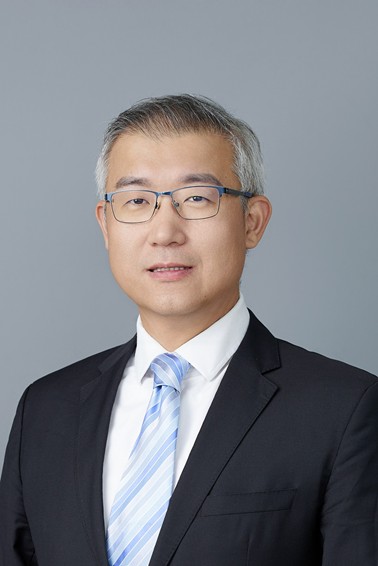
北森武彥 Takehiko Kitamori
NTHU - National Tsing Hua University, Taiwan
Title: World Premiere of Microfluidic Chemical Plant: Largescale serial-parallel microfluidic system for chemical production
🔽 Show Bio
Dr. Takehiko Kitamori received his BS degree in the Department of Pure and Applied Science in 1980 and his Ph.D. degree in engineering in 1989, both from The University of Tokyo. Dr. Kitamori is Yushan Honorary Chair Professor (2020-present). Before joining the NTHU, he was Vice President of the University of Tokyo, responsible for Human Resource Development and Internationalization (2012-14), Dean of Faculty and Graduate School of Engineering (2010-12), and a researcher at Hitachi's Energy Research Lab (1980-89). He is the author of more than 300 journal papers and has written over 50 book chapters. His research areas are Micro/Extended-Nano Fluidics, Extended-Nano Space Chemistry, Applied Laser Spectroscopy for Analytical Chemistry, and Large-scale Parallelizing of Microfluidic Systems.

Thomas Laurell
Lund University, Sweden
Title: Acoustochromatography - A Novel Method for Extracellular Vesicle Isolation
🔽 Show Bio
Thomas Laurell is Professor of Biomedical Engineering at Lund University.
He has authored 270+ peer-reviewed publications, holds 35 patents, and has received 24,000+ citations (h-index 78).
He is a Distinguished Professor of the Swedish Research Council and a member of the Royal Swedish Academy of Sciences.
He is also the founder of AcouSort AB and a recognized leader in microsystems and biomedical engineering.
陳致真 Chih-chen Chen
NTHU - National Tsing Hua University, Taiwan
Title: Micro/Nanofluidic Systems for Handling Biological Samples at Pico/Femtoliter Volumes
🔽 Show Bio
Education
2000-2006 Ph.D. in Bioengineering/Nanotechnology, University of Washington Seattle, Washington
1995-1997 M.S. in Electrical Engineering/Biomedical Engineering, National Taiwan University Taipei, Taiwan
1991-1995 B.S. in Electrical Engineering, National Taiwan University Taipei, Taiwan
Experience
2022-present Professor, iNEMS, PME, NTHU
2021-present Co-Director, Daicel-NTHU Joint R&D Center, NTHU
2022-2025 Executive Vice Chairman, Interdisciplinary Program of Engineering. NTHU
2015-2022 Associate Professor, iNEMS, PME, NTHU
2010-2015 Assistant Professor, iNEMS, NTHU
2006-2009 Research Associate, Center for Engineering in Medicine and Department of Surgery, Massachusetts
General Hospital, Shriners Hospitals for Children and Harvard Medical School, Boston, Massachusetts
1997-1999 R&D Engineer, ASUSTek Computer Inc., Taipei, Taiwan
Research Interests
microfluidics, nanofluidics, bioMEMS, extracellular vesicles, and large-scale parallelizing of microfluidic systems
Honors & International Services
2025 Contribution Award, Nanotechnology and Micro System Association, Taiwan
2024 General Chair, International Conference on Smart Sensors (ICSS 2024)
2023 General Chair, International Workshop on Microfluidic Chemical Plant
2023 University-Industry Collaboration Excellence Award, NTHU
2023 Excellent Teaching Award, College of Engineering, NTHU
2021-2024 Excellent Young Scholar Research Award, National Science and Technology Council
2020 Outstanding Reviewer for Analyst
2017 Innovation in Taiwan, Institute for Biotechnology and Medicine Industry
2017-2020 Excellent Young Scholar Research Award, Ministry of Science and Technology
2014 Excellent Teaching Award, College of Engineering, NTHU
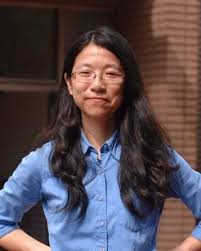
Igor Plazl
University of Ljubljana, Slovenia
Title: Parallel-Plate Micro(Bio)reactors: From Models to Design
🔽 Show Bio
Igor Plazl is a Professor of Chemical Engineeering at University of Ljubljana (UL), Slovenia. He was awarded his PhD in 1993 and became a full professor of chemical engineering in 2010. In 1989, he worked in Bayer AG, Leverkusen, and in 2003/04 half-year at Oregon State University, USA as a visiting professor (Fulbright Grant). He was Vice dean of the Faculty of Chemistry and Chemical Technology, University of Ljubljana (2010-2014), and recently is Head of the Chair of Chemical, Biochemical, and Environmental Engineering. His main research interests are microfluidics, mathematical modeling of (bio)chemical processes, multiscale modeling at the micro scale. He had many invited and also plenary lectures and he has published several cited papers in peer reviewed journals on the topic of microfluidics.
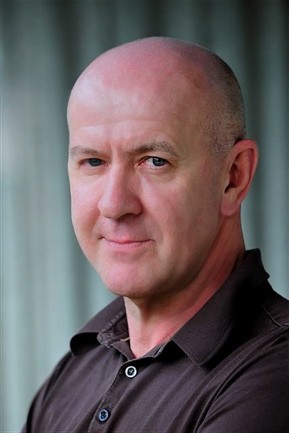
真栄城 正寿 Masatoshi Maeki
Hokkaido University, Japan
Title: Development of Microfluidic Devices for Lipid-based Nanoparticles and RNA Delivery
🔽 Show Bio
Masatoshi Maeki is an Associate Professor in the Division of Applied Chemistry at the Faculty of Engineering, Hokkaido University. He received his Ph.D. degree in 2014 from Kyushu University. After graduation, he worked as a Research Fellow of the Japan Society for the Promotion of Science (JSPS) at Hokkaido University. He joined the Faculty of Engineering at Hokkaido University as an Assistant Professor in 2015 and was promoted to Associate Professor in 2021. His research focuses on the development of microfluidic devices for applications in drug delivery systems and biomolecular analysis. He has received several awards, including the Minister of Education, Culture, Sports, Science and Technology (MEXT) Prize for Young Scientists in the field of science and technology in 2024. He also received the Hokkaido Science and Technology Encouragement Award in 2023, the Japan Society for Analytical Chemistry Award for Young Researcher’s in 2016, and the Young Innovator Award on Chemistry and Micro-Nano Systems (CHEMINAS Young Innovator Award) in 2015.
Johan Nilsson
Lund University, Sweden
Title: Acoustically actuated microfluidic systems - From droplet control to nanoparticle levitation
🔽 Show Bio
Johan Nilsson received his Master of Science in Electrical Engineering at Lund Institute of Technology in 1987. In 1993 he obtained his Ph.D. in Electrical Measurements on the topic Ink Jet and Droplet Technology at the Department of Electrical Measurements, Lund University. Following the Ph.D., he got a post-doc employment at the same department where he headed the research in droplet formation characterizations and silicon nozzle development. He developed the concept of flow-through microdispensing in 1995 and the topic for the research has since then been microfluidics and microstructures with a focus on microsystems for droplet based processes, protein analysis using mass spectrometry and acoustic trapping for bio-analysis. During the years 2000 - 2022 was the head of the Department of Electrical Measurements, then the Department of Biomedical Engineering at Lund University. He has also been involved in industrial projects in the biomedical area including sensor development, treatment control units and acoustofluidic components development. He currently holds a position as Associate Professor at the Dept. of Biomedical Engineering.
Kazuhito Takeda
Daicel Corporation, Japan
Title: Approach to Microfluidic Technology Applications
🔽 Show Bio
Education
M. Eng, Kobe University, Division of Applied Chemical Science and Engineering, 1998. 03
B. Eng, Kobe University, Division of Applied Chemical Science and Engineering, 1996. 03
Experience
2024- Present: Senior Manager, Process Technology Center, Daicel Corporation, Japan
2014-2023: Manager, Process Technology Center, Daicel Corporation, Japan
2002-2013 : Staff, Cellulose Process Development Center, Daicel Corporation, Japan
1998- 2001: Staff, Production Department of Himeji Production Sector, Daicel Corporation, Japan
Chun-Ting Lin
OCIC/NTHU, Taiwan
Title: University Science Park, powered by NTHU
🔽 Show Bio
Summary
With over 15 years of cross-disciplinary experience spanning deep-tech biomed startups (Neuboron), industry-academic collaboration (NTHU), government think tank (Executive Yuan), and research institutes (NARL), Dr. CT currently serves as the Executive Director of the University Science Park (USP) and COO of the Operations Center for Industry Collaboration in NTHU. He leads the planning and implementation of Taiwan’s first university-initiated and university-operated science park, positioning USP as NTHU’s global-facing platform for research translation, open innovation, and deep-tech commercialization.
Working closely with government agencies, global corporates, and international academic partners, Dr. CT focuses on building trusted innovation mechanisms that bridge academia, industry, and capital across borders. His work has contributed to a threefold increase in NTHU’s patent licensing transactions in recent years. Earlier in his career, Dr. CT accumulated more than a decade of hands-on R&D experience and has authored and co-authored 19 SCI papers and been granted 28 patents.
Expertise
․ University Science Park & Open Innovation Ecosystem
․ Industry-academic Partnerships & Innovation Policy
․ IP management, Licensing, and Patent Analysis
․ Deep-tech Spin-off
Education
․ Ph.D., Engineering and System Science, NTHU, Taiwan | 2012 – 2016
․ M.S., Engineering and System Science, NTHU, Taiwan | 2006 – 2008
․ B.S., Materials Science and Engineering, NTHU, Taiwan | 2001 – 2006
․ Executive Program, IP Law & Tech Transfer (MMOT), George Washington University, University of Washington, NCCU | 2011.
․ Short-Term Legal Studies (Non-degree), Shih Hsin University, Taiwan | 2007 – 2009
Atsushi Mori
Daicel Corporation, Japan
Title: Microfluidic Device for Polymerization and Process Intensification
🔽 Show Bio
Education
M. Eng, The University of Osaka, Division of Applied Chemistry, 2002. 03
B. Eng, The University of Osaka, Division of Applied Chemistry, 2000. 03
Experience
2015- Present: Manager, Process Technology Center, Daicel Corporation, Japan
2012-2014 : Staff, Process Development Center, Daicel Corporation, Japan
2002- 2011: Staff, Organic Development Center, Daicel Chemical Industries, Ltd., Japan
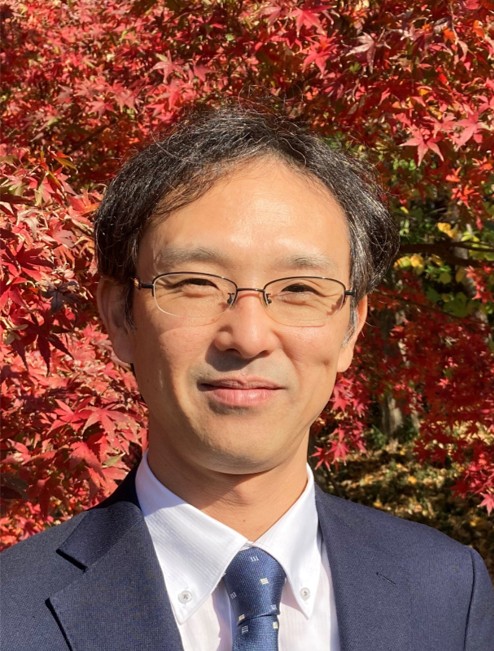
Adelina Smirnova
KISTEC, Japan
Title: Temperature Controlled Polymer Synthesis on Glass Microfluidic Chips
🔽 Show Bio
Education:
Ph.D. Analytical Chemistry, Department of Chemistry, Moscow State University – Moscow, Russia 2007
M.Sc. Department of Chemistry, Moscow State University – Moscow, Russia 2000
Research interests:
Micro- and nanofluidics; analytical applications; sensors; micro- and nanochannels fabrication; functional surface
modifications
Experience:
2023 – Researcher, Kanagawa Institute of Industrial Science and Technology (KISTEC)
2019 – Researcher, Department of Mechanical Engineering, The University of Tokyo
2018 – Engineer, R&D Samsung Japan
2012 – Researcher, Department of Applied Chemistry, The University of Tokyo
2009 – Researcher, 4 Universities Consortium
2008 – Researcher, Kanagawa Academy of Science and Technology (KAST)
2006 – Researcher, Department of Applied Chemistry, The University of Tokyo
2003 – Research Student, Department of Applied Chemistry, The University of Tokyo
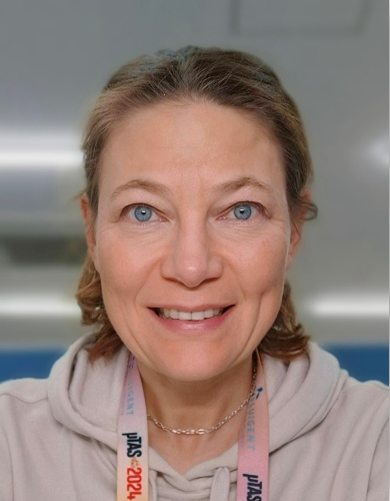
Hisashi Shimizu
KISTEC, Japan
Title: Mixing and Granulation of Microparticles in Microfluidic Device
🔽 Show Bio
Hisashi Shimizu received his Ph.D. in Engineering from The University of Tokyo in 2012. He served as an Assistant Professor at The University of Tokyo from 2013 to 2018. Subsequently, he held positions as a Project Assistant Professor at the International Research Center for Neurointelligence (WPI-IRCN) from 2018 to 2020, and at Collaborative Research Organization for Micro and Nano Multifunctional Devices from 2020 to 2023. Since 2023, he has been the Deputy Project Leader of the Microfluidic Chemical Plant Project at the Kanagawa Institute of Industrial Science and Technology (KISTEC). His research interests include micro/nano analytical chemistry, photothermal conversion spectroscopy, and desktop chemical plants.
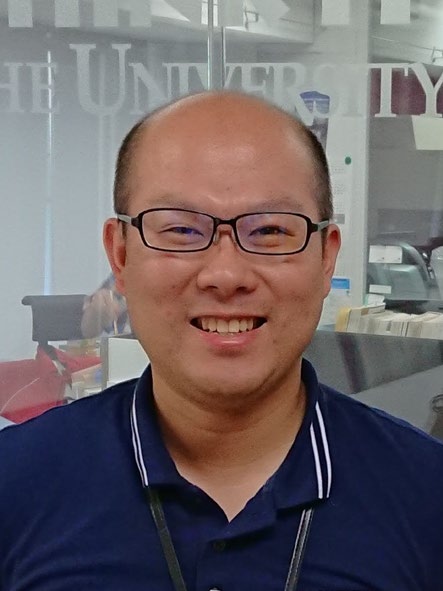
佐野大樹 Hiroki Sano
IMT TAIWAN CO., LTD., Taiwan
Title: A Heating System With Precise and Uniform Temperature Control for Chemical Processing Utilizing Microfluidic Devices
🔽 Show Bio
EDUCATION
Apr. 2019 – Mar. 2022
Doctor of Engineering
Department of Applied Chemistry, The University of Tokyo | Tokyo, Japan
Apr. 2017 – Mar. 2019
Master of Engineering
Department of Applied Chemistry, The University of Tokyo | Tokyo, Japan
Apr. 2013 – Mar. 2017
Bachelor of Engineering
Department of Applied Chemistry, The University of Tokyo | Tokyo, Japan
WORK EXPERIENCE
Jun. 2025 –
Chief Engineer, R&D Department
IMT Taiwan Co., Ltd.
Apr. 2022 – May 2025
Engineer, R&D Department
IMT Taiwan Co., Ltd.
Yi-Ping Ho, Megan
The Chinese University of Hong Kong, Hong Kong
Title: Light-Responsive Droplets Stabilized by Plasmonic Nanoparticles for Biomedical Applications
🔽 Show Bio
Yi-Ping (Megan) Ho is currently a Professor, the Vice Chairman (Research) and the MSc Program Director in the Department of Biomedical Engineering at The Chinese University of Hong Kong. She received her B.S. and M.S. in Power Mechanical Engineering from National Tsing-Hua University, Taiwan. She received her Ph.D. in Mechanical Engineering from the Johns Hopkins University. After her postdoctoral training at the Department of Biomedical Engineering in Duke University, she received the Young Elite Researcher Award from the Danish Research Council and started her independent career in the Interdisciplinary Nanoscience Centre and the Department of Molecular Biology and Genetics at Aarhus University in Denmark. She has published 90 peer-reviewed journal articles, 7 book chapters, 92 conference papers, edited 1 book and holds 7 granted patents. The results that she presented have been recognized internationally by the American Society of Gene Therapy and Controlled Release Society. Her research is focused on developing nanosensors and microfluidics as diagnostic tools to expand the capacity of disease detection and treatment evaluation.
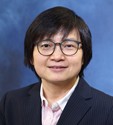
森川響二朗 Kyojiro Morikawa
NTHU - National Tsing Hua University, Taiwan
Title: Nanofluidic Reactor using the Solid/Liquid Interface in Glass Nanochannels
🔽 Show Bio
Kyojiro Morikawa received his Ph.D. degree from the University of Tokyo in 2013. He worked in the University of Tokyo from 2013 to 2014. From 2014–2016, he worked at Tokyo Institute of Technology. Since 2016, he has been working at the University of Tokyo. In 2021, he was appointed as a Project Lecturer at the University of Tokyo, and an Assistant Professor at National Tsing Hua University (Taiwan). His research interests cover microfluidics and nanofluidics, especially for nanochannel fabrication, nanoscale liquid chemistry, nanofluidic devices such as nanofluidic reactor, separation device, and so on.
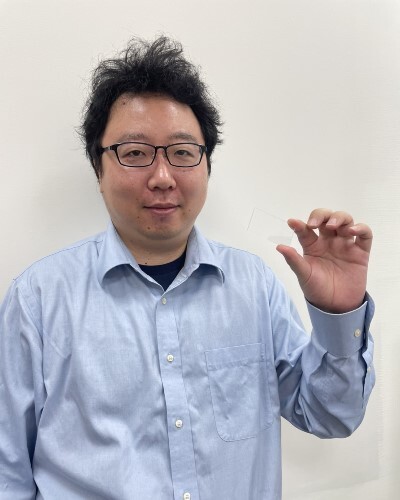
何浩培 Aaron H.P. Ho
The Chinese University of Hong Kong, Hong Kong
Title: Single Molecule Analysis With A Pyramidal Silicon Nanopore
🔽 Show Bio
Professor Aaron Ho-Pui HO received his BEng and PhD in Electrical and Electronic Engineering from the University of Nottingham. Currently a professor at the Department of Biomedical Engineering, The Chinese University of Hong Kong (CUHK), his previous appointments include Associate Professor at the Department of Electronic Engineering, Associate Dean of Engineering, CUHK; Assistant Professor in Department of Physics and Materials Science, City University of Hong Kong; Senior Process Engineer for semiconductor laser fabrication in Hewlett-Packard. His service in the professional and academic community includes Chairman of Hong Kong Optical Engineering Society; Chairman of IEEE Electron Device/Solid-State Circuits (ED/SSC) Hong Kong Chapter, Admission Panel member of Technology Business Incubation Programme (IncuTech) operated by Hong Kong Science and Technology Parks Corporation (HKSTP); Council Member of The Technological and Higher Education Institute of Hong Kong (THEi). His current academic interests focus on nano-sized semiconductor materials for photonic and sensor applications, optical instrumentation, surface plasmon resonance biosensors, lab-on-a-chip, solid-state nanopore and biophotonics. He has published over 400 peer-reviewed articles, 33 Chinese and 6 US patents. He is a Fellow of SPIE.
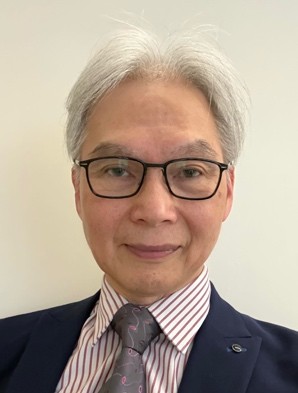
蔣雅郁 Ya-Yu Chiang
NTU - National Taiwan University, Taiwan
Title: A Novel Continuous Downstream Purification Method
🔽 Show Bio
Prof. Ya-Yu Chiang is an Associate Professor at the Department of Mechanical Engineering at National Taiwan University. She obtained her doctor's degree from the Department of Biochemical and Chemical Engineering, Technische Universität Dortmund, Germany. Her current research interests are fluidic manipulation, microfluidics, biomimicry, and multiphase mass transfer and mechanics. Dr. Chiang is recognized with the Ta-You Wu Memorial Award, Excellent Young Scholars, and Taiwan Future Tech Awards from the National Science and Technology Council. She has also received several awards, including Corning Outstanding Female Researcher 2023, a Gold medal in the Taiwan Innotech Expo Innovation Patent Competition

Daiki Tanaka
Waseda University, Japan
Title: Laser-Field-Driven Molecular Control of Dinuclear Metal Complexes in a UV-Irradiated Microfluidic Platform
🔽 Show Bio
2018 Ph.D. in Engineering, Graduate School of Advanced Science and Engineering, Waseda University, Japan
2018 Research Assistant, Research Organization for Nano & Life Innovation, Waseda University
2020 Junior Researcher, Research Organization for Nano & Life Innovation, Waseda University
2024 Assistant Professor, School of Fundamental Science and Engineering, Waseda University
黃振煌 Jen-Huang Huang
NTHU - National Tsing Hua University, Taiwan
Title: Continuous Microfluidic Production and Purification of Metal–Organic Frameworks for Sustainable Environmental Applications
🔽 Show Bio
Prof. Huang specializes in the development and integration of advanced microfluidic technologies, with broad applications spanning biomedical engineering, chemical processing, and materials synthesis. His pioneering research has led to significant breakthroughs, including the world’s first microfluidic cancer drug screening platform enabling rapid, personalized therapeutic selection for cancer patients. This innovation has received recognition and support from prestigious governmental programs, facilitating its path toward commercialization. Additionally, Prof. Huang developed an innovative continuous protein purification platform leveraging 3D microfluidic network technology combined with intelligent process control systems, markedly enhancing purification efficiency and product integrity. This work earned the Future Tech Award in 2023. Since joining National Tsing Hua University in 2016, Prof. Huang has published 32 high-impact research articles in renowned international journals such as Advanced Healthcare Materials, Advanced Functional Materials, Lab on a Chip, and Analytical Chemistry. He holds 28 domestic and international patents across system design, methodology, and instrumentation, with diverse applications including cell culture, drug screening, fluid control, and materials analysis. Prof. Huang’s contributions have been recognized globally, including two R&D 100 Awards (2016, 2019), the National Innovation Award (2024), the NSTC Outstanding Young Scholar Award, and the Chemical Engineering Excellence Award from the Taiwan Institute of Chemical Engineers.